2026-10-23 ·
Signs Spray Foam Needs Removal in Homes Close to the River Avon
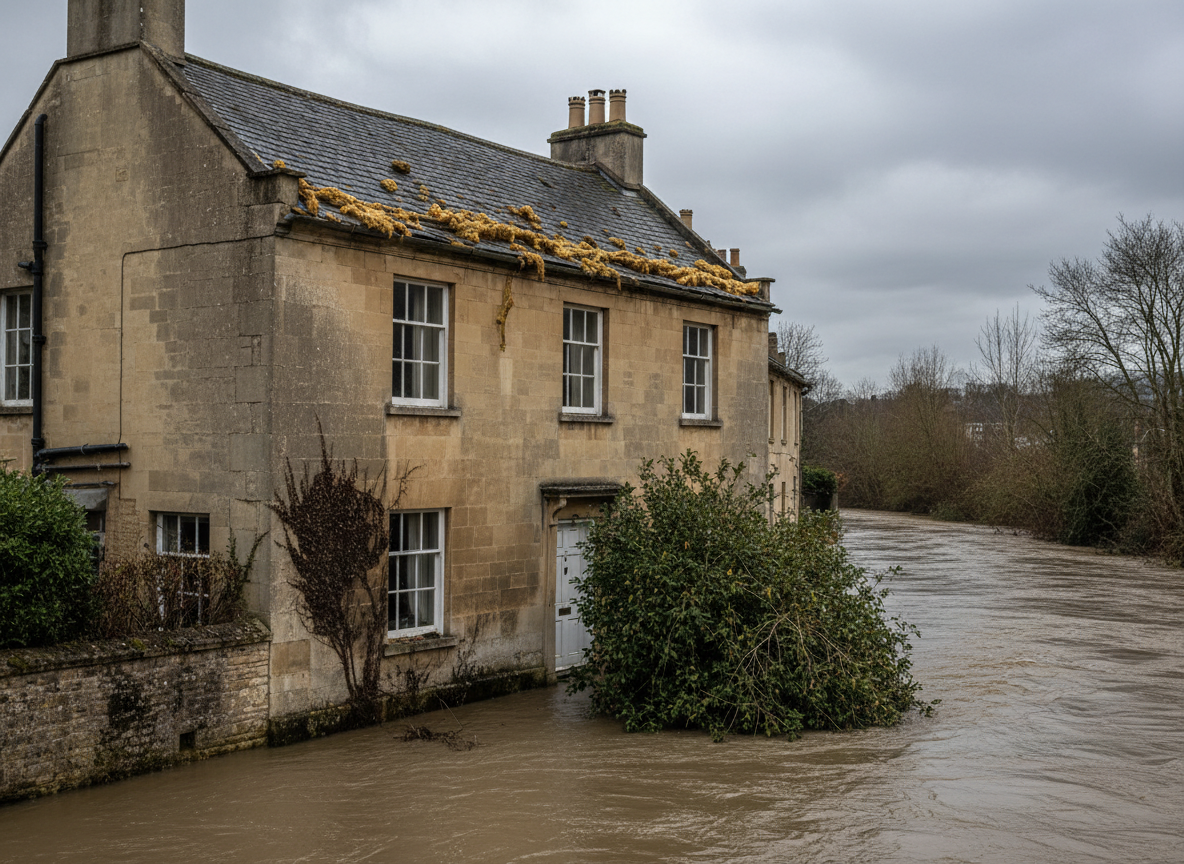
Homes within 200 meters of the River Avon in Bath commonly display persistent damp patches on ceilings and walls, musty odors that worsen after heavy rain, and visible black mold along joist lines within 3–5 years of installation. These indicators arise because river proximity raises ground moisture levels and increases indoor humidity, especially during Somerset's wet winters when water tables rise.
Moisture Patterns Near the River Avon
Bath's riverside terraces, particularly those in areas like Bathwick and Widcombe, sit on clay-heavy soils that retain water longer than upland ground. Spray foam traps this moisture against timber roof structures, leading to rot that spreads along rafters within 18–24 months. Homeowners notice staining that reappears within days after dry spells end, unlike standard condensation which clears faster. Flood events, even minor ones reaching 30–50 cm, push water into cavities where closed-cell foam prevents drying. Checking for soft spots in floorboards above ground level reveals the extent before structural weakening occurs.
Mold Growth and Air Quality Issues
Elevated humidity from the Avon creates conditions where mold colonies expand rapidly behind foam layers. Residents report respiratory irritation that improves when windows stay open for extended periods, pointing to trapped spores rather than external allergens. In Georgian and Victorian stock common near the river, original lath and plaster allows mold to migrate into wall voids. Testing air samples shows spore counts 3–4 times higher than in non-foamed attics. Removing the foam exposes these colonies for proper remediation, restoring breathability to the building fabric.
Effects on Historic Terraced Housing
Many Bath properties near the Avon feature stone walls and timber roofs dating to the 1800s, where spray foam was added later without accounting for original ventilation paths. The foam bridges gaps that once allowed moisture to escape, accelerating decay in oak beams. Owners observe sagging ceilings or nail pops along party walls after successive wet seasons. Linking this to broader cost considerations appears in Cost Factors for Spray Foam Removal in Bath Terraced Properties. Professional assessment identifies whether partial or full removal protects the building's integrity.
Timing Removal Around Seasonal Conditions
Work near the River Avon benefits from scheduling between March and September when water levels drop and rainfall averages fall below 60 mm monthly. Wet winters increase the risk of re-saturation during projects, extending drying times by weeks. Properties in nearby Keynsham and Bradford-on-Avon face similar patterns due to shared river catchment. An insulation assessment determines the safest window and method for each site.
Practical Next Steps for Riverside Homeowners
Document visible signs with dated photos and note any correlation with river level reports from the Environment Agency. Contact local specialists operating 24/7 from Cambridge House, Henry Street, Bath BA1 1BT for on-site evaluation. Early intervention limits repair scope to the affected loft or roof sections rather than full replacement.