2026-10-23 ·
How to Spot Failing Spray Foam in Georgian Homes Around Bath
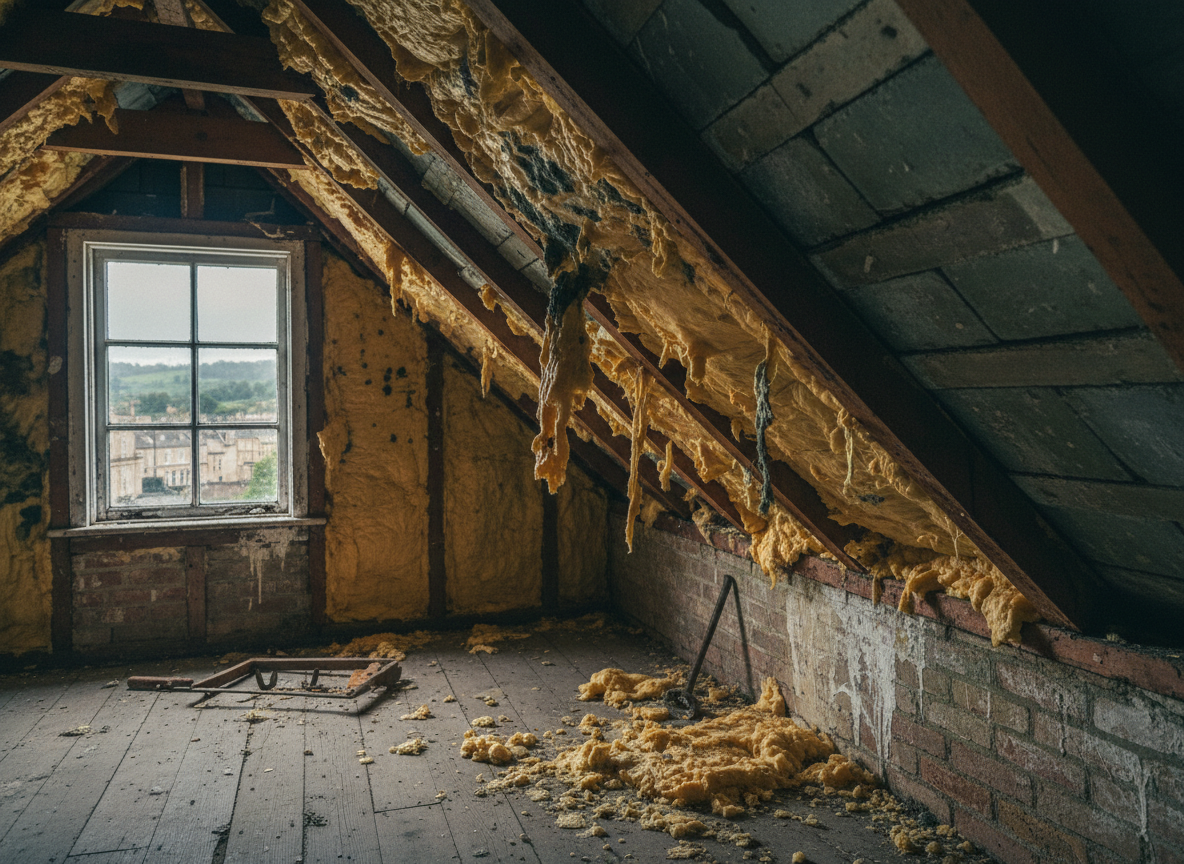
Failing spray foam in Georgian homes around Bath typically becomes noticeable after 8–15 years when moisture from Somerset's wet winters penetrates the original roof structures and breaks the bond with timber and stone.
Checking Loft and Roof Spaces for Adhesion Loss
In Bath's Georgian terraces and townhouses, spray foam often pulls away from the underside of slate roofs and rafters first. Walk the loft and look for gaps wider than 5 mm along the edges where the foam meets the timber. These separations appear most often on north-facing slopes that receive less direct sun and stay damp longer. Georgian properties in areas close to the River Avon experience higher humidity levels that accelerate this process, especially in homes built before 1830 with original oak beams that expand and contract seasonally. Homeowners should inspect after heavy rainfall periods in autumn and winter when water tracks through small roof defects and collects under the foam layer. Consistent checks in these spaces reveal delamination before it spreads to larger sections of the ceiling below.
Moisture Staining and Mold Patterns on Ceilings
Water marks on plaster ceilings in Bath Georgian homes frequently trace back to spray foam that has lost its vapor control function. Look for brownish rings or streaks along the cornice lines and around chimney breasts, which are common in properties near Bath Abbey where original lead flashings have aged. Mold colonies often form in linear patterns following the rafter lines because closed cell foam traps condensation against the cold stone walls. These signs differ from simple roof leaks because the discoloration spreads gradually across multiple joist bays rather than appearing in one concentrated spot. Residents in central Bath report these patterns worsening during prolonged wet spells when the foam no longer allows the roof void to breathe properly.
Timber Decay and Structural Movement Clues
Georgian roof timbers in the Bath area suffer when spray foam prevents natural drying after winter rain. Press on ceiling joists with a screwdriver in several locations; soft spots or dark discoloration indicate rot that has advanced behind the foam layer. Sagging roof planes visible from the street often correspond to internal foam failure that has allowed rafters to move. Properties in neighborhoods such as Widcombe and Lyncombe show these issues more frequently because of their steeper pitches and exposure to prevailing winds that drive rain under tiles. Checking for new cracks in internal plaster walls that align with roof timbers provides further confirmation that the insulation has stopped performing its intended role.
Professional assessment through an insulation assessment helps confirm whether removal is required before timber repairs become extensive. For homes near the River Avon, additional guidance appears in signs spray foam needs removal in homes close to the river avon. Readers planning work near protected buildings may also review protecting original features during spray foam removal near bath abbey before contacting SafeSurface Solutions at Cambridge House, Henry Street, Bath BA1 1BT, available 24/7 for loft spray foam removal.