2026-10-23 ·
Timing Spray Foam Removal Around Somerset's Wet Winters
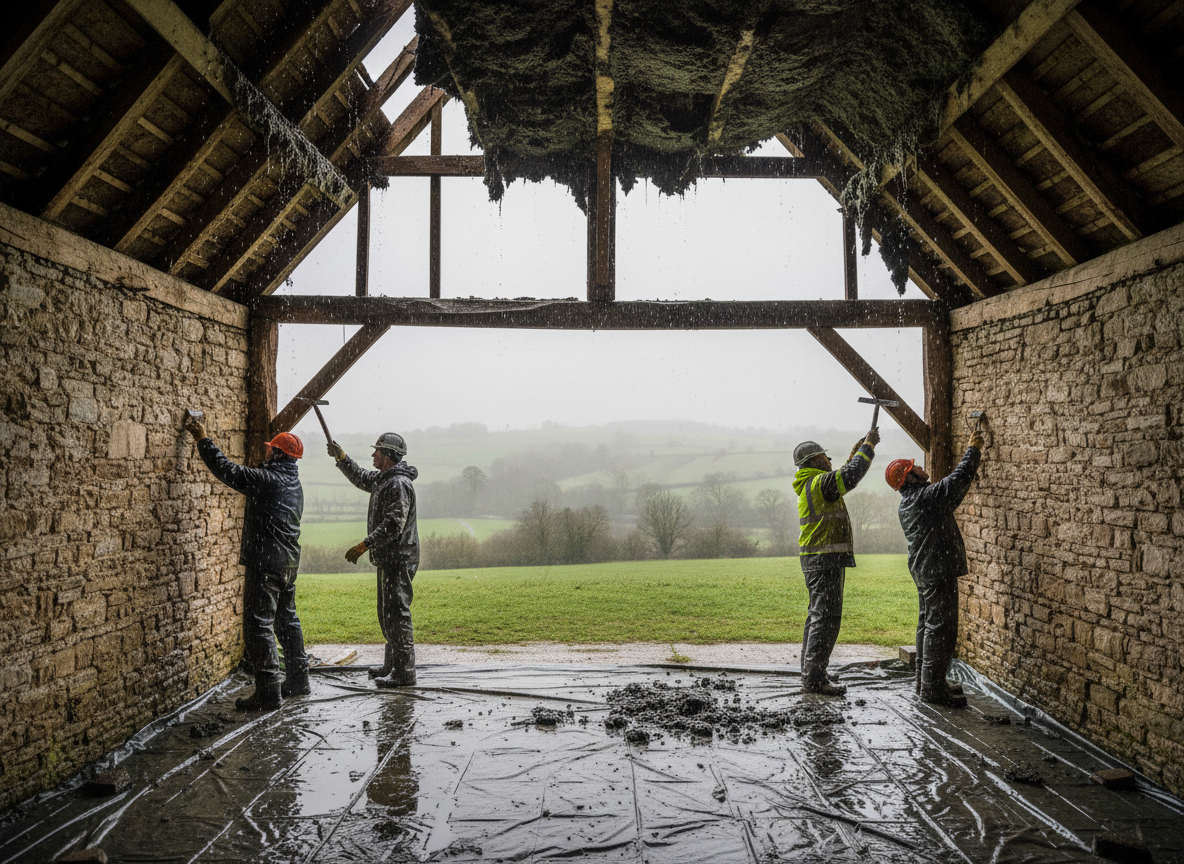
In the Bath area, schedule spray foam removal between May and September to work around Somerset's wet winters, when frequent rain and high humidity slow drying and increase the risk of trapped moisture in older properties. This window gives crews reliable access to lofts and roofs without constant weather interruptions that can stretch a job across extra days.
Winter Moisture Challenges in the Bath Region
Somerset winters bring repeated rainfall that saturates the ground around Bath's Georgian and Victorian terraces, raising indoor humidity levels that affect how spray foam releases from timber and stone. Properties near the River Avon often see slower evaporation, so removal work started in December or January can leave surfaces damp for weeks. Crews must monitor dew points daily because excess moisture turns dust into sludge during mechanical removal and forces extra drying time before any new insulation goes in. Homes in lower-lying parts of Bath and nearby valleys face the greatest delays when winter storms coincide with high water tables.
Ideal Timing Windows for Effective Removal
Late April through early October offers the steadiest conditions for Bath jobs because daytime temperatures stay above 10°C and rainfall drops enough for materials to dry overnight. Starting before the first autumn fronts arrive prevents the need to pause mid-job when sudden downpours hit. Local operators note that jobs begun in October can still finish if the forecast stays clear for ten consecutive days, yet any extension into November risks frost locking residual foam to rafters. Scheduling around these patterns keeps projects moving without repeated site visits.
Impact on Terraced Homes and River Avon Properties
Bath's narrow terraced houses limit equipment access, so wet weather quickly turns rear gardens into mud that blocks wheelbarrows and containment sheeting. Homes close to the River Avon already carry higher baseline moisture from the waterway, and winter rain pushes readings even higher, making complete foam removal harder without additional ventilation steps. Signs Spray Foam Needs Removal in Homes Close to the River Avon outlines the visible staining and musty odours that appear faster in these locations. Planning removal before the wet season reduces the chance of secondary mould growth between joists.
Practical Steps for Scheduling in Wet Conditions
Check long-range forecasts at least three weeks ahead and book a 24/7 Spray Foam Removal crew that can start the moment a dry spell arrives. 24/7 Spray Foam Removal teams in Bath can mobilise quickly when an unexpected clear window opens mid-week. Factor in an extra two days for drying after the main removal on any property within 500 metres of the river. Keep interior vents open and use dehumidifiers rated for at least 50 litres per day until moisture meters read below 12 percent. This approach limits callbacks and keeps the project aligned with the drier months.
Cost and Planning Considerations for Local Properties
Bath terraced properties often require more containment and hand work than newer builds, so Cost Factors for Spray Foam Removal in Bath Terraced Properties explains how weather-related drying time adds to the total. Booking in the drier months reduces the need for temporary heating or extra site visits that winter jobs frequently demand. Residents in Bath, Keynsham and surrounding villages find that confirming dates early secures crews before the post-summer rush begins.