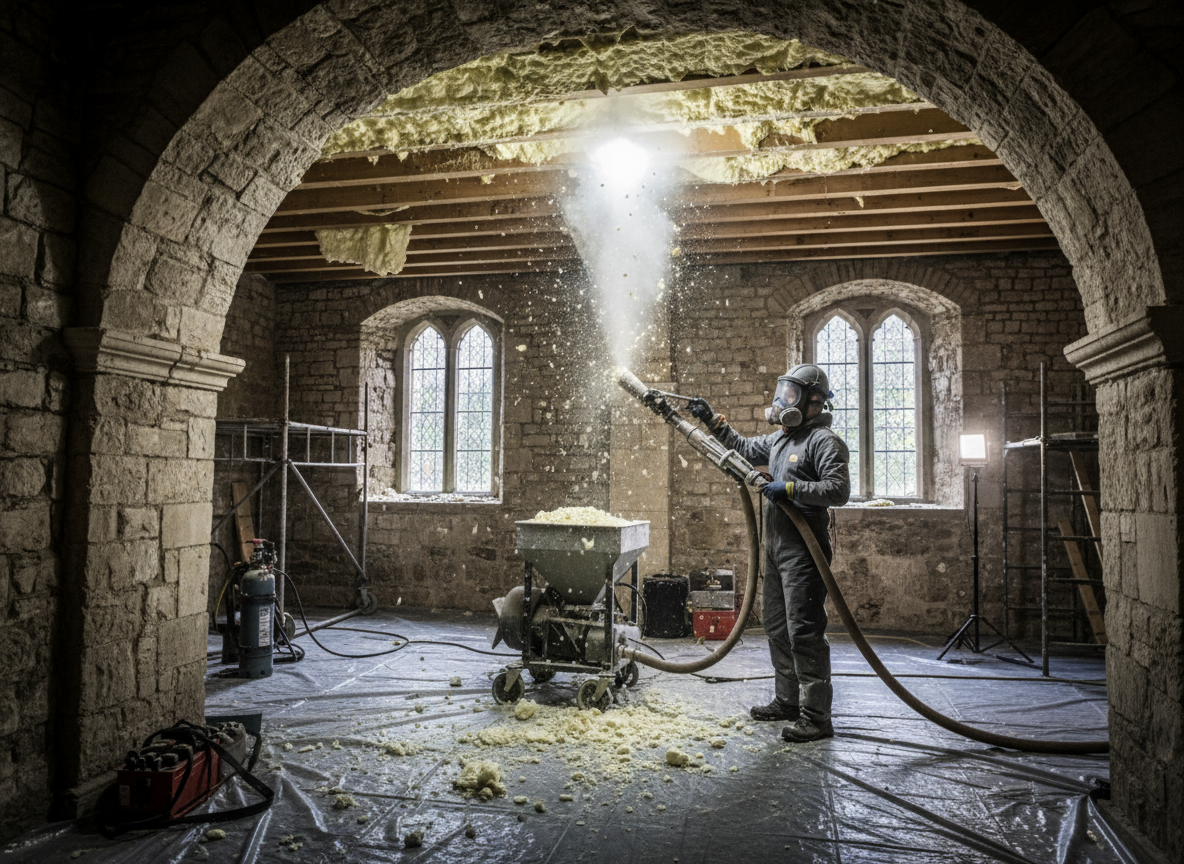
Dry ice blasting removes spray foam insulation by propelling solid CO2 pellets at high velocity, turning the foam brittle so it lifts cleanly from substrates. In Bath's Georgian and Victorian terraces, this method avoids the water damage or abrasive scarring that grinding or chemical strippers often cause on porous Bath stone and lime plaster. The process leaves no residue because the pellets sublimate on contact, which matters in enclosed roof voids where ventilation is limited and moisture from the River Avon catchment already stresses older timbers.
Bath's frequent winter rain and mild but persistently damp summers mean spray foam can trap condensation against rafters and joists. Dry ice blasting lets technicians inspect and treat those hidden surfaces immediately after removal rather than waiting for drying time. Edge cases include foam applied over original lathe and plaster ceilings in listed buildings; the non-abrasive blast preserves the substrate while still reaching foam lodged between joists. Homeowners should expect temporary ventilation of the property during and after the work because displaced foam particles and displaced air need controlled extraction.
Regulation in the Bath area requires care around heritage features. Technicians must protect chimney stacks, lead flashings and stone corbels that are common in the city centre terraces. The method produces no wastewater, which simplifies compliance on sites where drainage runs into the historic combined sewer system. After blasting, surfaces are ready for new insulation or repair without the curing delays associated with solvent-based removal.
Technician insight
In Bath, the thing that catches most people out with dry ice blasting spray foam removal is how often the foam was sprayed directly onto the back of original lath and plaster in Georgian terraces around the city centre. Once the pellets hit, the plaster can crack if it is already loose from years of Avon valley damp, so we have to work at lower pressure and check every few minutes.
Hidden Foam in a Lansdown Terrace Loft
Spray foam had been applied over rafters in a 19th-century Lansdown house and was trapping moisture against the timbers. Inspection showed the foam had also crept behind the original plaster ceiling. Dry ice blasting was used at reduced pressure to lift the foam without disturbing the lath. The ceiling remained intact and the rafters could be dried and treated the same day.
How it works
- 1
Site Assessment
Technicians inspect the foam depth, substrate type and access points in the specific Bath property, noting any listed-building constraints or timber condition.
- 2
Protection and Containment
Floors, electrics and adjacent rooms are sealed; dust extraction is set up to manage particles released during blasting.
- 3
Dry Ice Blasting
CO2 pellets are applied at controlled pressure to loosen foam without damaging stone, plaster or timber surfaces common in Bath terraces.
- 4
Clearance and Final Check
All loosened material is removed, surfaces are vacuumed and the area is inspected for remaining foam or substrate damage.
Pricing
Cost depends on foam thickness, access difficulty and property size; owner-operated quotes are provided after inspection.