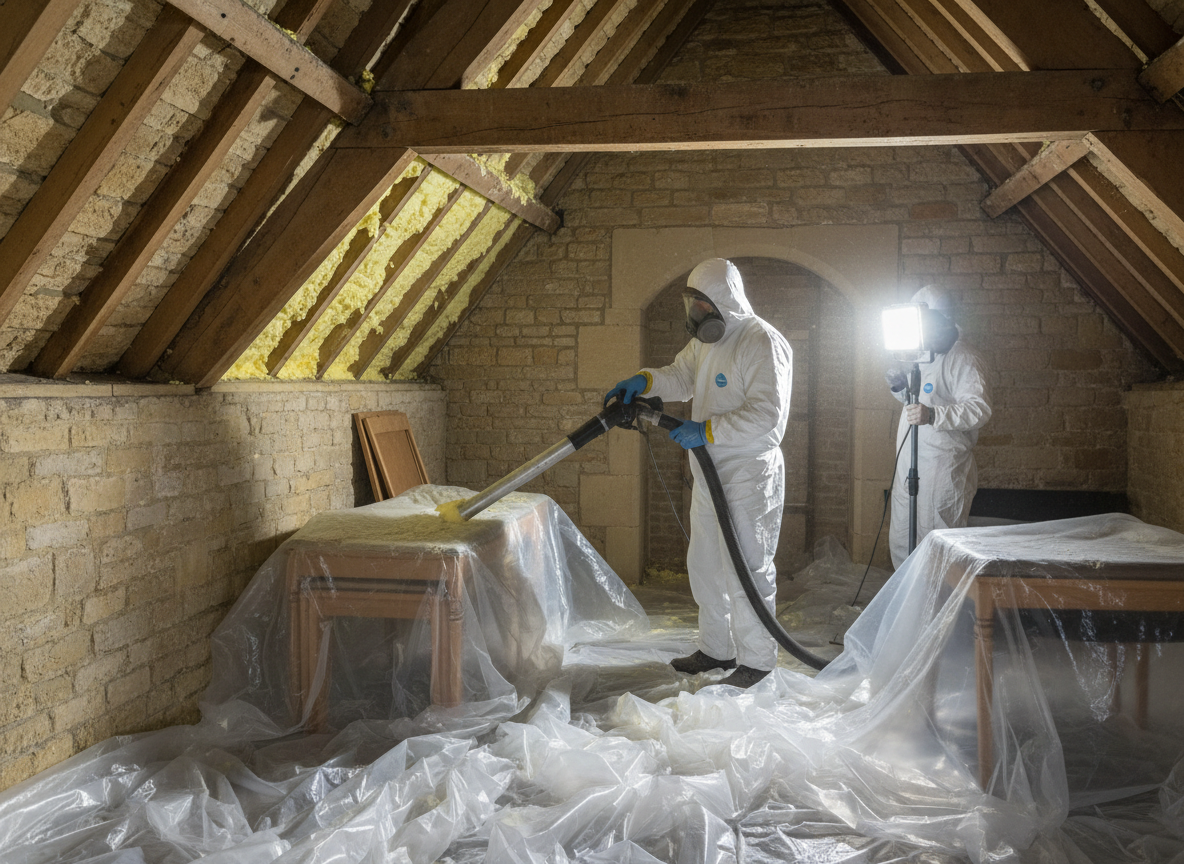
Bath's Georgian terraces and stone-built homes from the 1700s and 1800s frequently received spray foam insulation in lofts and under floors during energy upgrades. Mortgage surveyors now flag closed-cell foam that traps moisture against Bath stone or lime plaster, blocking breathability and triggering valuation issues. Removal requires careful separation from original timbers and walls without introducing new damp pathways, especially where properties sit on the sloping terrain around the River Avon.
Lenders often reject properties where foam was applied directly to rafters or between floor joists in pre-1919 buildings common across Bath and nearby villages like Batheaston. The work involves isolating affected sections, using low-impact mechanical methods to avoid disturbing historic fabric, and ensuring ventilation is restored to meet current lender criteria. Homeowners in areas like Widcombe or Oldfield Park face extra steps because surveyors check for hidden condensation risks that develop after the foam has been in place through several winters.
Edge cases include foam that has bonded to lead flashing or chimney stacks, which demands slower hand work to prevent damage that could affect the mortgage report. Proper sequencing prevents debris from falling into habitable spaces below, a frequent problem in multi-story terraces. Final verification includes photos and a clearance statement that surveyors accept, avoiding delays in property sales or remortgages.
Weather patterns in the Bath area add pressure: prolonged damp winters increase the chance that foam has retained moisture, making separation messier and requiring extra drying time before the lender will sign off. Properties on higher ground near Lansdown or lower areas near the river need different access plans and containment.
Technician insight
In Bath, the thing that catches most people out with mortgage lender spray foam removal is how closed-cell foam bonds to the back of stone walls in Georgian terraces, trapping moisture that only shows up once the foam is stripped and the surveyor returns during a wet winter.
Widcombe Terrace Mortgage Hold
A 1790s stone terrace in Widcombe failed its mortgage valuation because of closed-cell foam applied to the rafters. We found the foam had bridged a small roof leak and held moisture against the timbers. Careful mechanical removal restored breathability without disturbing the original roof structure, and the surveyor cleared the property within two weeks.
How it works
- 1
Initial Survey
Assess foam type, extent, and impact on the property's mortgage valuation using lender guidelines.
- 2
Access and Containment
Set up protection for historic finishes and create safe working zones in the Bath terrace or stone house.
- 3
Foam Removal
Mechanically separate and extract the insulation without damaging original timbers or stonework.
- 4
Ventilation Restoration and Clearance
Restore airflow, clean the space, and supply documentation for the mortgage surveyor.
Pricing
Cost depends on property age, foam coverage, and access constraints; site visit provides accurate quote.