2026-10-23 ·
Protecting Original Features During Spray Foam Removal Near Bath Abbey
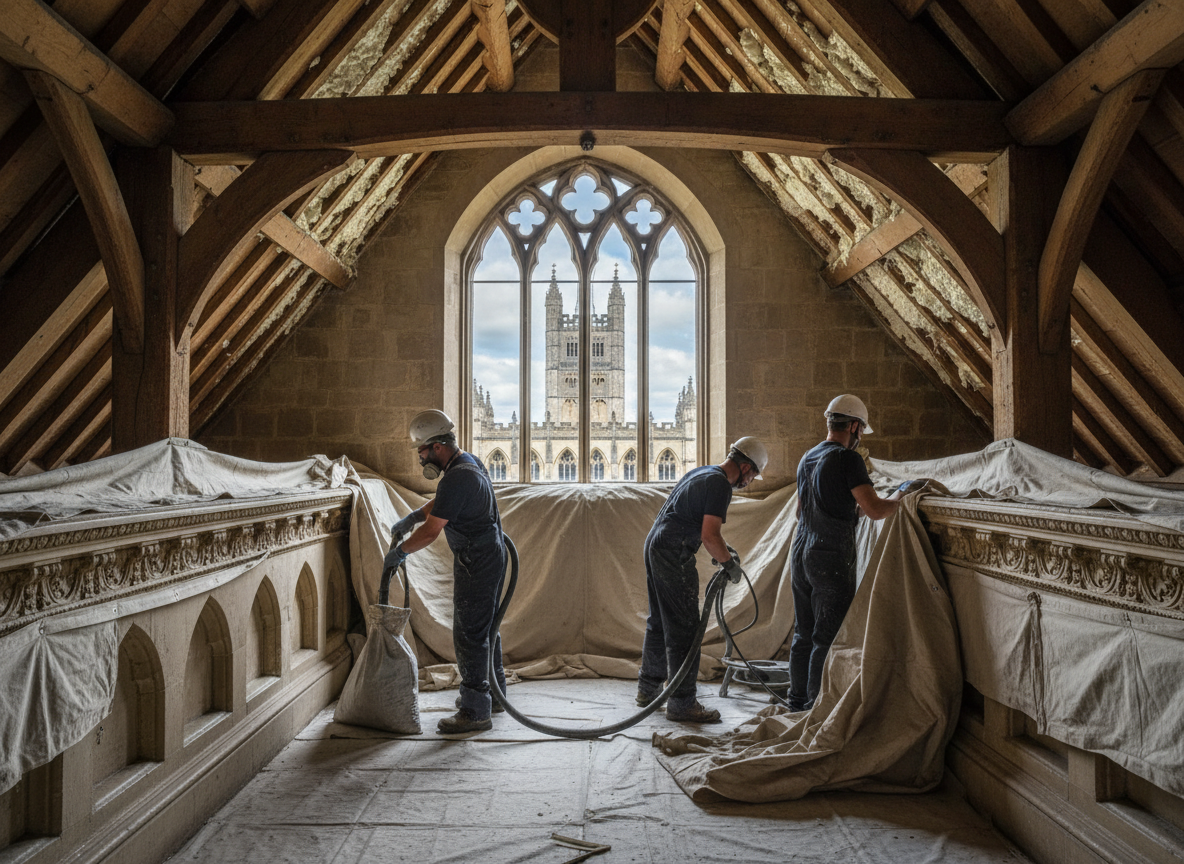
Spray foam removal near Bath Abbey can be completed without harming original stone, timber and plaster when crews use low-impact techniques such as dry ice blasting combined with targeted hand work. Properties in the city centre and surrounding terraces often date from the 1700s and 1800s, so every step must account for fragile lime plaster and hand-cut Bath stone that cannot withstand aggressive scraping or high-pressure water.
Assessing Historic Features Before Work Begins
Crew leaders start with a room-by-room survey of exposed beams, cornices and internal stone walls typical of homes within a few hundred metres of Bath Abbey. They photograph each original element and note areas where spray foam has bridged behind skirting boards or into roof voids. This record guides masking and helps avoid accidental contact with delicate mouldings during equipment movement. In terraced houses common throughout central Bath, shared walls mean vibration from one property can travel, so assessments also check neighbouring structures for existing cracks. The process usually takes two to four hours on site and feeds directly into a written protection plan that the homeowner reviews before any removal starts.
Selecting Removal Methods That Limit Damage
Dry ice blasting is often chosen for rooms with visible original features because the pellets sublimate on contact and leave no secondary abrasive residue. dry ice blasting spray foam removal crews adjust nozzle distance and pellet size to strip foam from timber joists without etching the wood surface. Where foam fills narrow cavities behind lath and plaster, technicians may switch to hand chisels and plastic scrapers to keep vibration low. These choices become especially important during Somerset's wet winters when timber is already holding higher moisture levels and is more prone to surface damage. Homeowners can read more about how property type affects pricing in the article Cost Factors for Spray Foam Removal in Bath Terraced Properties.
Protecting Stone, Timber and Plaster on Site
Once assessment is complete, crews cover floors with breathable sheeting and build temporary frames around fireplaces, windows and stair newels. Masking tape rated for historic surfaces is applied to stone edges so that any overspray or dust stays contained. In properties close to the River Avon, extra care is taken with lower ground floors where rising damp can make lime plaster softer; foam is removed in small sections so walls can be inspected for hidden moisture before the next area is tackled. Work is scheduled in daylight hours when possible so that natural light reveals fine details that artificial lamps might miss. All waste is bagged inside the property to prevent stone dust from settling on unprotected surfaces outside the work zone.
Aftercare and When to Call for 24/7 Support
After foam is cleared, surfaces are left to dry for at least 48 hours before any replastering or redecoration. Owners are advised to monitor for new cracks over the following weeks, especially around window reveals where thermal movement can occur once insulation is gone. SafeSurface Solutions operates 24/7 from Cambridge House, Henry Street, Bath BA1 1BT, so urgent follow-up visits for unexpected plaster movement can be arranged without delay. This approach keeps original features intact while returning the property to a condition suitable for modern use.